

Jaspreet Singh Boparai – Painting in Rome after Raphael
To Be Confirmed Oxford, United KingdomAward-winning director
Free
Award-winning director

Join Dr. Edward Howell, Lecturer in Politics at the University of Oxford and a leading expert on Korean Peninsula affairs, for an insightful lecture on South Korea’s turbulent political landscape. In this talk, Dr. Howell delves into the dramatic events surrounding the impeachment of President Yoon Suk Yeol in December 2024, exploring the causes, consequences, and broader implications for South Korea’s democracy. From the short-lived martial law declaration to the nation’s polarised response, gain a deeper understanding of this historic crisis and its impact on East Asian geopolitics.

The Pharos Spring Lecturer for 2025, Sir Paul Marshall, is one of the UK's leading investors, a major philanthropist, and now one of the country's most influential media owners. After spending the early part of his career at S.G. Warburg, he co-founded Marshall Wace LLP, one of London's first hedge funds, in 1997. He continues to serve as chairman and chief investment officer, and Marshall Wace is today one of Europe's largest hedge fund groups.
Marshall became heavily involved in educational philanthropy during the 2000s: as the author of several books on British schools, as founding trustee of the children's charity ARK and chairman of ARK Schools, and as lead Non-Executive Director at the Department for Education from 2013-16. His first venture into media was through the news website UnHerd in 2017. He later became a major investor in GBNews, briefly serving as chairman, before purchasing The Spectator in September 2024.
Formerly a major donor to the Liberal Democrats and a contributor to the Orange Book, Marshall left the party over its opposition to Brexit and his commitment to classical liberalism. He has since supported the Conservative Party and was one of the founders of the Alliance for Responsible Citizenship in 2023 with Jordan Peterson. He is one of Britain's premier philanthropists, often near the top of the Sunday Times Giving List. He was knighted in 2016.

'Why are western regimes in crisis? What can we do in Britain to turn the tide? Why have political and intellectual elites blown up their credibility? What replaces them?'
Dominic Cummings is a British political operative who served as Chief Advisor to the Prime Minister from 2019 to 2020. He previously served as director of Vote Leave during the EU Referendum of 2016, and as Special Adviser at the Ministry of Education from 2010 to 2014.
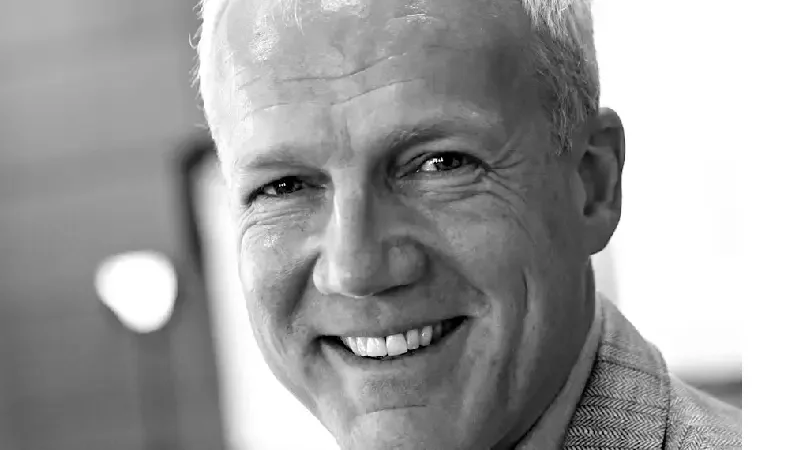
Marozzi brings to life the complexity and humanity of the Islamic world’s entanglement with slavery using an extraordinary range of sources, across more than a millennium and across sweeping geographies. Not just a mesmerising book, but a profoundly important one too’.

Focusing on the works of Paul Ricoeur and Jacques Derrida, these lectures present a tradition of philosophical ethics in France. This ethics does not concern what we should do. Ethics concerns responsibility in an extensive, immaterial sense: how can you be a person who takes responsibility beyond your immediate personal and social interests? We shall see how for Ricoeur this leads to a reflection on memory as a responsibility for the past and for Derrida it entails a conception of political utopia understood as responsibility for the unfulfilled hopes of history.
Focusing on the works of Paul Ricoeur and Jacques Derrida, these lectures present a tradition of philosophical ethics in France. This ethics does not concern what we should do. Ethics concerns responsibility in an extensive, immaterial sense: how can you be a person who takes responsibility beyond your immediate personal and social interests? We shall see how for Ricoeur this leads to a reflection on memory as a responsibility for the past and for Derrida it entails a conception of political utopia understood as responsibility for the unfulfilled hopes of history.
Focusing on the works of Paul Ricoeur and Jacques Derrida, these lectures present a tradition of philosophical ethics in France. This ethics does not concern what we should do. Ethics concerns responsibility in an extensive, immaterial sense: how can you be a person who takes responsibility beyond your immediate personal and social interests? We shall see how for Ricoeur this leads to a reflection on memory as a responsibility for the past and for Derrida it entails a conception of political utopia understood as responsibility for the unfulfilled hopes of history.
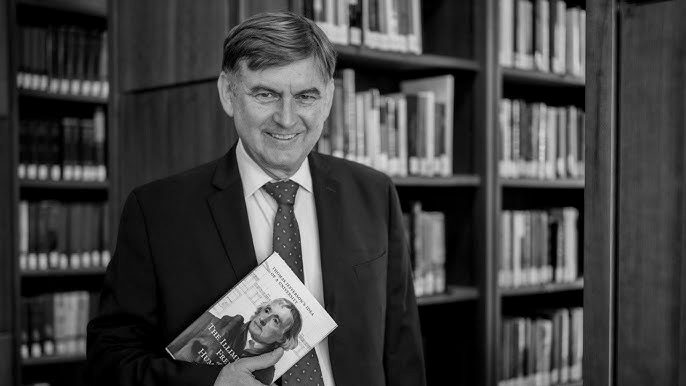
Thomas Jefferson was intimately involved in every aspect of the creation of the University of Virginia. It represented what he regarded as one of the three greatest achievements of his life to be listed on his tombstone. It revealed his talents as a lawyer who drafted the legislation for the assembly; as a surveyor who personally mapped the grounds; as a politician who masterminded the strategy to win approval in the assembly and to deflect intense opposition; as an architect who designed the layout, chose the building materials, and corresponded with the craftsman; and as an intellectual who developed an innovative curriculum, suggested the books for the library and the criteria for selecting the faculty. Jefferson was concerned with what remains a perennial issue which is the importance of education in the success of the republican democratic experiment. It was integral to his political philosophy in which he regarded public education as essential for the functioning of government by the people. He was part of what he regarded as the moral revolution that should accompany the political revolution of 1776. Although dismissed in higher education histories as a “finishing school for southern aristocrats” which trained many of the future leaders of the Confederacy, the lecture will argue that his vision of public education was as revolutionary as the other achievements on his tombstone and that it still has the potential to stimulate discussion about the role of universities. Furthermore, his vision of a university anticipated the idea of a modern university more than any other college in America.
Andrew O’Shaughnessy is Professor of History at the University of Virginia. Between 2003 and 2022, he served as Vice President of The Thomas Jefferson Foundation (Monticello), and the Saunders Director of the Robert H. Smith International Center for Jefferson Studies. His book The Men Who Lost America. British Leadership, the American Revolution and the Fate of the Empire (New Haven: Yale University Press, 2013) received eight national awards including the New York Historical Society American History Book Prize, the George Washington Book Prize, The National Society Daughters of the American Revolution Excellence in American History Book Award and The Society of Military History Book Prize. He is also the author of An Empire Divided: The American Revolution and the British Caribbean (Philadelphia: University of Pennsylvania Press, 2000). His most recent book books are The Illimitable Freedom of the Human Mind: Thomas Jefferson’s Idea of a University (Charlottesville: University of Virginia Press, 2021) and, co-authored with Trevor Burnard, Republic and Empire: Crisis, Revolution, and America’s Early Independence to be published by Yale University Press in September 2025. He is an editor of the Jeffersonian America series published by the University of Virginia Press. He coedited Old World, New World: America and Europe in the Age of Jefferson (Charlottesville: University of Virginia Press, 2010) and The Founding of Thomas Jefferson’s University of Virginia (Charlottesville: University of Virginia Press: 2019), and The European Friends of the American Revolution (Charlottesville: University of Virginia Press, 2023).
Focusing on the works of Paul Ricoeur and Jacques Derrida, these lectures present a tradition of philosophical ethics in France. This ethics does not concern what we should do. Ethics concerns responsibility in an extensive, immaterial sense: how can you be a person who takes responsibility beyond your immediate personal and social interests? We shall see how for Ricoeur this leads to a reflection on memory as a responsibility for the past and for Derrida it entails a conception of political utopia understood as responsibility for the unfulfilled hopes of history.

We can no longer take for granted international institutions such as the United Nations and the World Trade Organisation, the validity of international law and agreements, or even international norms.

The Pharos Monday Lectures for Spring 2026
Lecture 1: The Sound of Music in Ancient Greece
Lecture 2: Archimedes’ Eureka
Lecture 3. Catullus and his Lesbia
Lecture 4. Aspasia, Teacher of Socrates
It is sometimes thought that answers to big questions in classics are either known or beyond solution - questions such as what Greek music sounded like, or the true identity of Catullus’s Lesbia. In this series Prof Armand D'Angour will address four such questions and show that even today it’s possible to provide new and convincing answers to problems that many scholars had given up on.
Armand d'Angour is Professor of Classics and a Fellow of Jesus College, Oxford. His work has ranged across wide areas of Greek culture, especially music and lyric poetry. His works include Socrates in Love (Bloomsbury 2019) and How to Innovate: An Ancient Guide to Creative Thinking (Princeton 2021).
The Pharos Monday Lectures for Spring 2026
Lecture 1: The Sound of Music in Ancient Greece
Lecture 2: Archimedes’ Eureka
Lecture 3. Catullus and his Lesbia
Lecture 4. Aspasia, Teacher of Socrates
It is sometimes thought that answers to big questions in classics are either known or beyond solution - questions such as what Greek music sounded like, or the true identity of Catullus’s Lesbia. In this series Prof Armand D'Angour will address four such questions and show that even today it’s possible to provide new and convincing answers to problems that many scholars had given up on.
Armand d'Angour is Professor of Classics and a Fellow of Jesus College, Oxford. His work has ranged across wide areas of Greek culture, especially music and lyric poetry. His works include Socrates in Love (Bloomsbury 2019) and How to Innovate: An Ancient Guide to Creative Thinking (Princeton 2021).