• Alexander Marr – Art & Wit in the Renaissance

    Alexander Marr – Art & Wit in the Renaissance

    Noel Salter Room New College, Holywell Street, Oxford, United Kingdom

    From the satirical barbs of Erasmus’s In Praise of Folly (1511) to the urbane games of Castiglione’s Il libro del cortegiano (1528), wit was a serious subject in the Renaissance, addressed in natural philosophy and medicine as the intellective part of the human soul, in artistic theory as the wellspring of creativity, and in criticism as one of the most important markers of authorial voice. Yet wit’s visual fortunes in the period have barely been explored.

    Visual wit was a kind of pictorial ingenuity, through which artists sought to rebut the humanist claim that by imitating nature they were merely replicators, not inventors. Hans Holbein the Younger, in particular, engaged in a kind of guerilla warfare with the humanists he knew and portrayed, including Erasmus and Sir Thomas More, appropriating their ingenious techniques of ambiguity, self-contradiction, and disguise in a playful contest between painting and poetry.

    This series of lectures will trace visual wit in Holbein’s hands, as he evoked breath, voice, and brain through cunning conceits such as More’s ambivalent half-smile and Erasmus’s keen nose. In so doing, we will touch on some major themes in sixteenth-century culture: the complex nature of ‘character’; disputes over biological and artistic parentage; the paradox of lively death; and the vexed relationship between the thinking mind and skilled hand.

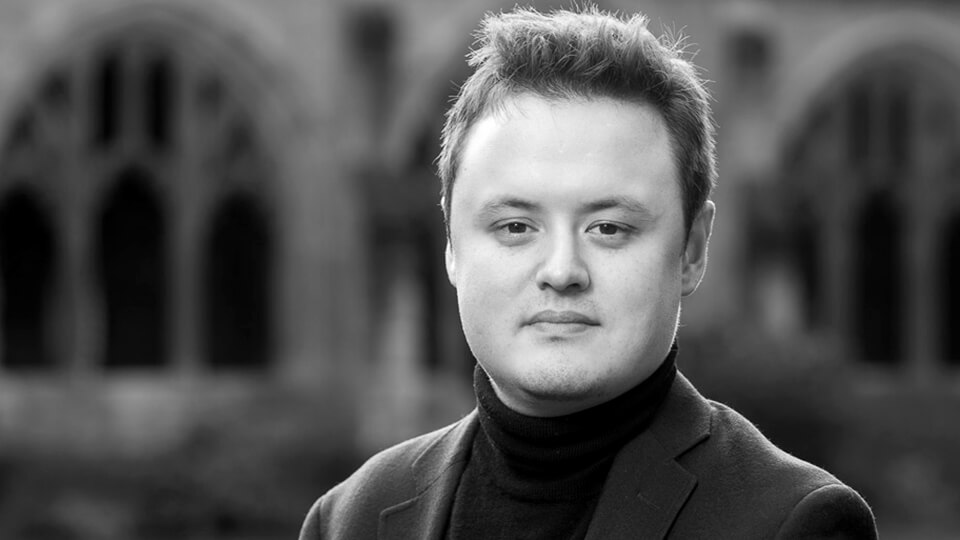
    Dr Alexander Marr FSA is Professor of Renaissance and Early Modern Art at the University of Cambridge, a Fellow of Trinity Hall, and President of Leonardo da Vinci Society. His most recent book is Rubens's Spirit: From Ingenuity to Genius, (2021).

    Free
  • Samuel Zeitlin – Geopolitics & Political Thought in the Twentieth Century

    Hinton Seminar Room Worcester College, Oxford, Oxfordshire, United Kingdom

    In the second Pharos Tuesday Seminar, Samuel Garrett Zeitlin shifts the focus to the liberal conservative political theorist Raymond Aron, examining his relationship with the German jurist Carl Schmitt to draw out two vastly contrasting perspectives on the international politics of the last century. The first lectures will examine Schmitt’s analysis of the First World War, his critique of the League of Nations, and his characteristic approach to the history of political thought. The final lecture will consider Raymond Aron’s response to Schmitt’s political thought, particularly on matters of foreign policy international affairs, in Aron’s studies of Clausewitz and of international relations. The lectures will also consider the Schmitt-Aron correspondence.

    Samuel Garrett Zeitlin is a distinguished historian of political ideas at University College London. He has worked extensively on the thought of Sir Francis Bacon, alongside Continental theorists of the twentieth century.

    Free
  • Adrian Goldsworthy – Greece & Rome at War

    Adrian Goldsworthy – Greece & Rome at War

    Robert Beddard Room Oriel College, Oxford, United Kingdom

    There are traces of violence and warfare from the earliest periods of human history, and by the Classical era wars were common events and, along with politics, became the major concern of historians. Greeks defeated Persian invasions, then fought each other. Alexander swept through the Persian empire. Rome and Carthage waged war on an immense scale, and at the end of it the Carthaginian Republic was eradicated. Rome created and maintained through military force an empire embracing much of the known world.

    Wars were important and shaped the development of the ancient world, but how should we understand them? Battles were major events, sometimes deciding wars, and were clearly important and need to be understood. Yet there was a lot more to ancient warfare than pitched battles, and it is vital to look at the attack and defence of fortified settlements and strongholds, and at lower level raids and skirmishes. The story of warfare in the Greek and Roman worlds is not simple, but remains of fundamental importance for understanding the era.

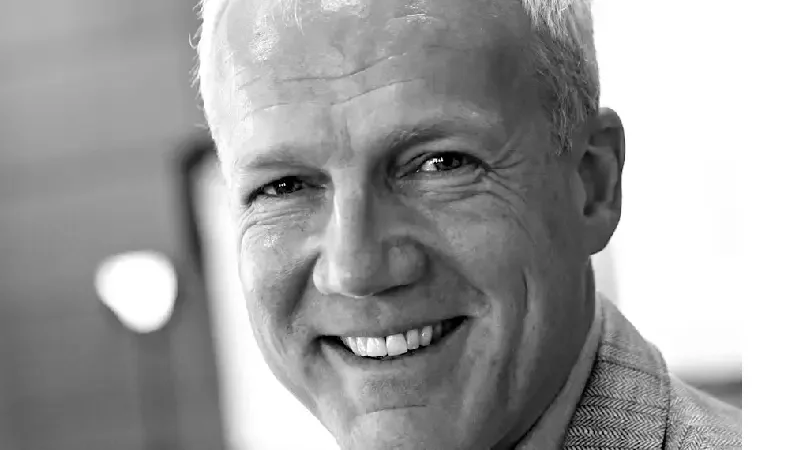
    Adrian Goldsworthy is an historian and novelist who specialises in ancient Roman history. His most recent work is The Eagle and the Lion: Rome, Persia and an Unwinnable Conflict, which was published in 2023

    Free
  • Adrian Goldsworthy – Greece & Rome at War

    Adrian Goldsworthy – Greece & Rome at War

    Robert Beddard Room Oriel College, Oxford, United Kingdom

    There are traces of violence and warfare from the earliest periods of human history, and by the Classical era wars were common events and, along with politics, became the major concern of historians. Greeks defeated Persian invasions, then fought each other. Alexander swept through the Persian empire. Rome and Carthage waged war on an immense scale, and at the end of it the Carthaginian Republic was eradicated. Rome created and maintained through military force an empire embracing much of the known world.

    Wars were important and shaped the development of the ancient world, but how should we understand them? Battles were major events, sometimes deciding wars, and were clearly important and need to be understood. Yet there was a lot more to ancient warfare than pitched battles, and it is vital to look at the attack and defence of fortified settlements and strongholds, and at lower level raids and skirmishes. The story of warfare in the Greek and Roman worlds is not simple, but remains of fundamental importance for understanding the era.

    Adrian Goldsworthy is an historian and novelist who specialises in ancient Roman history. His most recent work is The Eagle and the Lion: Rome, Persia and an Unwinnable Conflict, which was published in 2023

    Free
  • Edward Howell – South Korean Politics

    To Be Confirmed Oxford, United Kingdom

    Join Dr. Edward Howell, Lecturer in Politics at the University of Oxford and a leading expert on Korean Peninsula affairs, for an insightful lecture on South Korea’s turbulent political landscape. In this talk, Dr. Howell delves into the dramatic events surrounding the impeachment of President Yoon Suk Yeol in December 2024, exploring the causes, consequences, and broader implications for South Korea’s democracy. From the short-lived martial law declaration to the nation’s polarised response, gain a deeper understanding of this historic crisis and its impact on East Asian geopolitics.

  • Dominic Cummings: What Is To Be Done?

    Sheldonian Theatre Broad St, Oxford, United Kingdom

    'Why are western regimes in crisis? What can we do in Britain to turn the tide? Why have political and intellectual elites blown up their credibility? What replaces them?'

    Dominic Cummings is a British political operative who served as Chief Advisor to the Prime Minister from 2019 to 2020. He previously served as director of Vote Leave during the EU Referendum of 2016, and as Special Adviser at the Ministry of Education from 2010 to 2014.

    Free
  • Justin Marozzi – Islam and Slavery

    Justin Marozzi – Islam and Slavery

    Holywell Music Room Wadham College, Holywell St, Oxford, Oxfordshire, United Kingdom

    Marozzi brings to life the complexity and humanity of the Islamic world’s entanglement with slavery using an extraordinary range of sources, across more than a millennium and across sweeping geographies. Not just a mesmerising book, but a profoundly important one too’.

  • Reidar Due – The Ethics of Responsibility

    Reidar Due – The Ethics of Responsibility

    Pusey House, Ursell Room

    Focusing on the works of Paul Ricoeur and Jacques Derrida, these lectures present a tradition of philosophical ethics in France. This ethics does not concern what we should do. Ethics concerns responsibility in an extensive, immaterial sense: how can you be a person who takes responsibility beyond your immediate personal and social interests? We shall see how for Ricoeur this leads to a reflection on memory as a responsibility for the past and for Derrida it entails a conception of political utopia understood as responsibility for the unfulfilled hopes of history.

  • Reidar Due – The Ethics of Responsibility

    Reidar Due – The Ethics of Responsibility

    Pusey House, Ursell Room

    Focusing on the works of Paul Ricoeur and Jacques Derrida, these lectures present a tradition of philosophical ethics in France. This ethics does not concern what we should do. Ethics concerns responsibility in an extensive, immaterial sense: how can you be a person who takes responsibility beyond your immediate personal and social interests? We shall see how for Ricoeur this leads to a reflection on memory as a responsibility for the past and for Derrida it entails a conception of political utopia understood as responsibility for the unfulfilled hopes of history.

  • Reidar Due – The Ethics of Responsibility

    Reidar Due – The Ethics of Responsibility

    Pusey House, Ursell Room

    Focusing on the works of Paul Ricoeur and Jacques Derrida, these lectures present a tradition of philosophical ethics in France. This ethics does not concern what we should do. Ethics concerns responsibility in an extensive, immaterial sense: how can you be a person who takes responsibility beyond your immediate personal and social interests? We shall see how for Ricoeur this leads to a reflection on memory as a responsibility for the past and for Derrida it entails a conception of political utopia understood as responsibility for the unfulfilled hopes of history.

  • Andrew O’Shaughnessy – Thomas Jefferson’s Idea of a University

    Buchanan Room, Jesus College

    Thomas Jefferson was intimately involved in every aspect of the creation of the University of Virginia. It represented what he regarded as one of the three greatest achievements of his life to be listed on his tombstone. It revealed his talents as a lawyer who drafted the legislation for the assembly; as a surveyor who personally mapped the grounds; as a politician who masterminded the strategy to win approval in the assembly and to deflect intense opposition; as an architect who designed the layout, chose the building materials, and corresponded with the craftsman; and as an intellectual who developed an innovative curriculum, suggested the books for the library and the criteria for selecting the faculty. Jefferson was concerned with what remains a perennial issue which is the importance of education in the success of the republican democratic experiment. It was integral to his political philosophy in which he regarded public education as essential for the functioning of government by the people. He was part of what he regarded as the moral revolution that should accompany the political revolution of 1776. Although dismissed in higher education histories as a “finishing school for southern aristocrats” which trained many of the future leaders of the Confederacy, the lecture will argue that his vision of public education was as revolutionary as the other achievements on his tombstone and that it still has the potential to stimulate discussion about the role of universities. Furthermore, his vision of a university anticipated the idea of a modern university more than any other college in America.

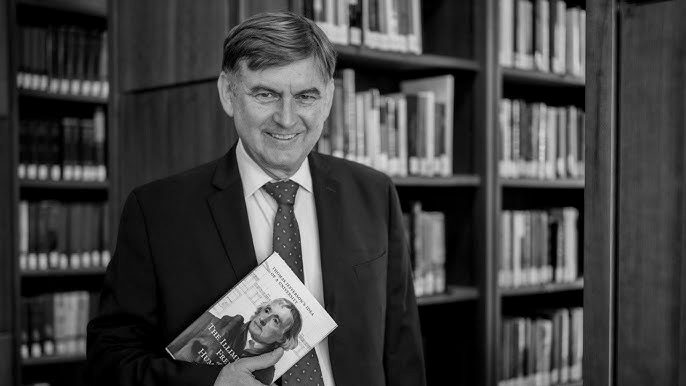
    Andrew O’Shaughnessy is Professor of History at the University of Virginia. Between 2003 and 2022, he served as Vice President of The Thomas Jefferson Foundation (Monticello), and the Saunders Director of the Robert H. Smith International Center for Jefferson Studies. His book The Men Who Lost America. British Leadership, the American Revolution and the Fate of the Empire (New Haven: Yale University Press, 2013) received eight national awards including the New York Historical Society American History Book Prize, the George Washington Book Prize, The National Society Daughters of the American Revolution Excellence in American History Book Award and The Society of Military History Book Prize. He is also the author of An Empire Divided: The American Revolution and the British Caribbean (Philadelphia: University of Pennsylvania Press, 2000). His most recent book books are The Illimitable Freedom of the Human Mind: Thomas Jefferson’s Idea of a University (Charlottesville: University of Virginia Press, 2021) and, co-authored with Trevor Burnard, Republic and Empire: Crisis, Revolution, and America’s Early Independence to be published by Yale University Press in September 2025. He is an editor of the Jeffersonian America series published by the University of Virginia Press. He coedited Old World, New World: America and Europe in the Age of Jefferson (Charlottesville: University of Virginia Press, 2010) and The Founding of Thomas Jefferson’s University of Virginia (Charlottesville: University of Virginia Press: 2019), and The European Friends of the American Revolution (Charlottesville: University of Virginia Press, 2023).

  • Reidar Due – The Ethics of Responsibility

    Reidar Due – The Ethics of Responsibility

    Pusey House, Ursell Room

    Focusing on the works of Paul Ricoeur and Jacques Derrida, these lectures present a tradition of philosophical ethics in France. This ethics does not concern what we should do. Ethics concerns responsibility in an extensive, immaterial sense: how can you be a person who takes responsibility beyond your immediate personal and social interests? We shall see how for Ricoeur this leads to a reflection on memory as a responsibility for the past and for Derrida it entails a conception of political utopia understood as responsibility for the unfulfilled hopes of history.