
• Adrian Goldsworthy – Greece & Rome at War

    Adrian Goldsworthy – Greece & Rome at War
    Robert Beddard Room Oriel College, Oxford, United Kingdom

    There are traces of violence and warfare from the earliest periods of human history, and by the Classical era wars were common events and, along with politics, became the major concern of historians. Greeks defeated Persian invasions, then fought each other. Alexander swept through the Persian empire. Rome and Carthage waged war on an immense scale, and at the end of it the Carthaginian Republic was eradicated. Rome created and maintained through military force an empire embracing much of the known world.

    Wars were important and shaped the development of the ancient world, but how should we understand them? Battles were major events, sometimes deciding wars, and were clearly important and need to be understood. Yet there was a lot more to ancient warfare than pitched battles, and it is vital to look at the attack and defence of fortified settlements and strongholds, and at lower level raids and skirmishes. The story of warfare in the Greek and Roman worlds is not simple, but remains of fundamental importance for understanding the era.

    Adrian Goldsworthy is an historian and novelist who specialises in ancient Roman history. His most recent work is The Eagle and the Lion: Rome, Persia and an Unwinnable Conflict, which was published in 2023

    Free
  • Alexander Marr – Art & Wit in the Renaissance

    Alexander Marr – Art & Wit in the Renaissance
    Noel Salter Room New College, Holywell Street, Oxford, United Kingdom

    From the satirical barbs of Erasmus’s In Praise of Folly (1511) to the urbane games of Castiglione’s Il libro del cortegiano (1528), wit was a serious subject in the Renaissance, addressed in natural philosophy and medicine as the intellective part of the human soul, in artistic theory as the wellspring of creativity, and in criticism as one of the most important markers of authorial voice. Yet wit’s visual fortunes in the period have barely been explored.

    Visual wit was a kind of pictorial ingenuity, through which artists sought to rebut the humanist claim that by imitating nature they were merely replicators, not inventors. Hans Holbein the Younger, in particular, engaged in a kind of guerilla warfare with the humanists he knew and portrayed, including Erasmus and Sir Thomas More, appropriating their ingenious techniques of ambiguity, self-contradiction, and disguise in a playful contest between painting and poetry.

    This series of lectures will trace visual wit in Holbein’s hands, as he evoked breath, voice, and brain through cunning conceits such as More’s ambivalent half-smile and Erasmus’s keen nose. In so doing, we will touch on some major themes in sixteenth-century culture: the complex nature of ‘character’; disputes over biological and artistic parentage; the paradox of lively death; and the vexed relationship between the thinking mind and skilled hand.

    Dr Alexander Marr FSA is Professor of Renaissance and Early Modern Art at the University of Cambridge, a Fellow of Trinity Hall, and President of Leonardo da Vinci Society. His most recent book is Rubens's Spirit: From Ingenuity to Genius, (2021).

    Free
  • Samuel Zeitlin – Geopolitics & Political Thought in the Twentieth Century

    Hinton Seminar Room Worcester College, Oxford, Oxfordshire, United Kingdom

    In the second Pharos Tuesday Seminar, Samuel Garrett Zeitlin shifts the focus to the liberal conservative political theorist Raymond Aron, examining his relationship with the German jurist Carl Schmitt to draw out two vastly contrasting perspectives on the international politics of the last century. The first lectures will examine Schmitt’s analysis of the First World War, his critique of the League of Nations, and his characteristic approach to the history of political thought. The final lecture will consider Raymond Aron’s response to Schmitt’s political thought, particularly on matters of foreign policy international affairs, in Aron’s studies of Clausewitz and of international relations. The lectures will also consider the Schmitt-Aron correspondence.

    Samuel Garrett Zeitlin is a distinguished historian of political ideas at University College London. He has worked extensively on the thought of Sir Francis Bacon, alongside Continental theorists of the twentieth century.

    Free
  • Adrian Goldsworthy – Greece & Rome at War

    Adrian Goldsworthy – Greece & Rome at War
    Robert Beddard Room Oriel College, Oxford, United Kingdom

    There are traces of violence and warfare from the earliest periods of human history, and by the Classical era wars were common events and, along with politics, became the major concern of historians. Greeks defeated Persian invasions, then fought each other. Alexander swept through the Persian empire. Rome and Carthage waged war on an immense scale, and at the end of it the Carthaginian Republic was eradicated. Rome created and maintained through military force an empire embracing much of the known world.

    Wars were important and shaped the development of the ancient world, but how should we understand them? Battles were major events, sometimes deciding wars, and were clearly important and need to be understood. Yet there was a lot more to ancient warfare than pitched battles, and it is vital to look at the attack and defence of fortified settlements and strongholds, and at lower level raids and skirmishes. The story of warfare in the Greek and Roman worlds is not simple, but remains of fundamental importance for understanding the era.

    Adrian Goldsworthy is an historian and novelist who specialises in ancient Roman history. His most recent work is The Eagle and the Lion: Rome, Persia and an Unwinnable Conflict, which was published in 2023

    Free
  • Adrian Goldsworthy – Greece & Rome at War

    Adrian Goldsworthy – Greece & Rome at War
    Robert Beddard Room Oriel College, Oxford, United Kingdom

    There are traces of violence and warfare from the earliest periods of human history, and by the Classical era wars were common events and, along with politics, became the major concern of historians. Greeks defeated Persian invasions, then fought each other. Alexander swept through the Persian empire. Rome and Carthage waged war on an immense scale, and at the end of it the Carthaginian Republic was eradicated. Rome created and maintained through military force an empire embracing much of the known world.

    Wars were important and shaped the development of the ancient world, but how should we understand them? Battles were major events, sometimes deciding wars, and were clearly important and need to be understood. Yet there was a lot more to ancient warfare than pitched battles, and it is vital to look at the attack and defence of fortified settlements and strongholds, and at lower level raids and skirmishes. The story of warfare in the Greek and Roman worlds is not simple, but remains of fundamental importance for understanding the era.

    Adrian Goldsworthy is an historian and novelist who specialises in ancient Roman history. His most recent work is The Eagle and the Lion: Rome, Persia and an Unwinnable Conflict, which was published in 2023

    Free
  • Justin Marozzi – Islam and Slavery

    Justin Marozzi – Islam and Slavery
    Holywell Music Room Wadham College, Holywell St, Oxford, Oxfordshire, United Kingdom

    Marozzi brings to life the complexity and humanity of the Islamic world’s entanglement with slavery using an extraordinary range of sources, across more than a millennium and across sweeping geographies. Not just a mesmerising book, but a profoundly important one too’.

  • Reidar Due – The Ethics of Responsibility

    Reidar Due – The Ethics of Responsibility
    Pusey House, Ursell Room

    Focusing on the works of Paul Ricoeur and Jacques Derrida, these lectures present a tradition of philosophical ethics in France. This ethics does not concern what we should do. Ethics concerns responsibility in an extensive, immaterial sense: how can you be a person who takes responsibility beyond your immediate personal and social interests? We shall see how for Ricoeur this leads to a reflection on memory as a responsibility for the past and for Derrida it entails a conception of political utopia understood as responsibility for the unfulfilled hopes of history.

  • Reidar Due – The Ethics of Responsibility

    Reidar Due – The Ethics of Responsibility
    Pusey House, Ursell Room

    Focusing on the works of Paul Ricoeur and Jacques Derrida, these lectures present a tradition of philosophical ethics in France. This ethics does not concern what we should do. Ethics concerns responsibility in an extensive, immaterial sense: how can you be a person who takes responsibility beyond your immediate personal and social interests? We shall see how for Ricoeur this leads to a reflection on memory as a responsibility for the past and for Derrida it entails a conception of political utopia understood as responsibility for the unfulfilled hopes of history.

  • Reidar Due – The Ethics of Responsibility

    Reidar Due – The Ethics of Responsibility
    Pusey House, Ursell Room

    Focusing on the works of Paul Ricoeur and Jacques Derrida, these lectures present a tradition of philosophical ethics in France. This ethics does not concern what we should do. Ethics concerns responsibility in an extensive, immaterial sense: how can you be a person who takes responsibility beyond your immediate personal and social interests? We shall see how for Ricoeur this leads to a reflection on memory as a responsibility for the past and for Derrida it entails a conception of political utopia understood as responsibility for the unfulfilled hopes of history.

  • Reidar Due – The Ethics of Responsibility

    Reidar Due – The Ethics of Responsibility
    Pusey House, Ursell Room

    Focusing on the works of Paul Ricoeur and Jacques Derrida, these lectures present a tradition of philosophical ethics in France. This ethics does not concern what we should do. Ethics concerns responsibility in an extensive, immaterial sense: how can you be a person who takes responsibility beyond your immediate personal and social interests? We shall see how for Ricoeur this leads to a reflection on memory as a responsibility for the past and for Derrida it entails a conception of political utopia understood as responsibility for the unfulfilled hopes of history.

  • Armand d’Angour – Songmaking to Socrates: New Light on Ancient Classics

    Noel Salter Room New College, Holywell Street, Oxford, United Kingdom

    The Pharos Monday Lectures for Spring 2026

    Lecture 1: The Sound of Music in Ancient Greece

    Lecture 2: Archimedes’ Eureka

    Lecture 3. Catullus and his Lesbia

    Lecture 4. Aspasia, Teacher of Socrates

    It is sometimes thought that answers to big questions in classics are either known or beyond solution - questions such as what Greek music sounded like, or the true identity of Catullus’s Lesbia. In this series Prof Armand D'Angour will address four such questions and show that even today it’s possible to provide new and convincing answers to problems that many scholars had given up on.

    Armand d'Angour is Professor of Classics and a Fellow of Jesus College, Oxford. His work has ranged across wide areas of Greek culture, especially music and lyric poetry. His works include Socrates in Love (Bloomsbury 2019) and How to Innovate: An Ancient Guide to Creative Thinking (Princeton 2021).

  • Armand d’Angour – Songmaking to Socrates: New Light on Ancient Classics

    Noel Salter Room New College, Holywell Street, Oxford, United Kingdom

    The Pharos Monday Lectures for Spring 2026

    Lecture 1: The Sound of Music in Ancient Greece

    Lecture 2: Archimedes’ Eureka

    Lecture 3. Catullus and his Lesbia

    Lecture 4. Aspasia, Teacher of Socrates

    It is sometimes thought that answers to big questions in classics are either known or beyond solution - questions such as what Greek music sounded like, or the true identity of Catullus’s Lesbia. In this series Prof Armand D'Angour will address four such questions and show that even today it’s possible to provide new and convincing answers to problems that many scholars had given up on.

    Armand d'Angour is Professor of Classics and a Fellow of Jesus College, Oxford. His work has ranged across wide areas of Greek culture, especially music and lyric poetry. His works include Socrates in Love (Bloomsbury 2019) and How to Innovate: An Ancient Guide to Creative Thinking (Princeton 2021).

  • James Tilley – Tribal Politics: How Brexit Divided Britain

    Buchanan Room, Jesus College

    Overview
    The Pharos Tuesday Seminars for Spring 2026

    The tenth anniversary of the EU referendum is fast approaching and many will be focused on how Brexit has, or has not, changed the economic and political world. But what if the most important change was not to institutions, political parties and the economy, but to us? This lecture series explores how the referendum, and its aftermath, sparked a form of ‘tribal politics’ that reshaped how people saw themselves, each other and the wider world. The first lecture looks at how the referendum created two powerful and enduring political identities in Britain: Leavers and Remainers. Why did an issue of such little interest to so many people suddenly become the key way that people identified themselves and others? The second lecture turns to the consequences of this transformation. Why did Leavers and Remainers dislike, look down on and discriminate against people simply because they belonged to the other group? And how did those brand-new political identities come to change our views of not just other people, but reality itself? The final lecture explores the resilience and future of tribal politics in Britain. Why did some people embrace their identity so fervently while others did not, and what does this tell us about both the future of British politics but also political divides in other countries at other times?

    James Tilley is a Professor of Politics at the University of Oxford and a Fellow of Jesus College, Oxford. He is the author of two books and numerous articles that investigate how we form political attitudes and make political choices. His latest book, co-authored with Sara Hobolt, is Tribal Politics: How Brexit Divided Britain and will be published by Oxford University Press in March 2026. He regularly makes documentaries for BBC Radio 4 on all aspects of political attitudes, from primate politics to conspiracy theories, the most recent being a five-part series titled ‘The kids are alt-right?’.
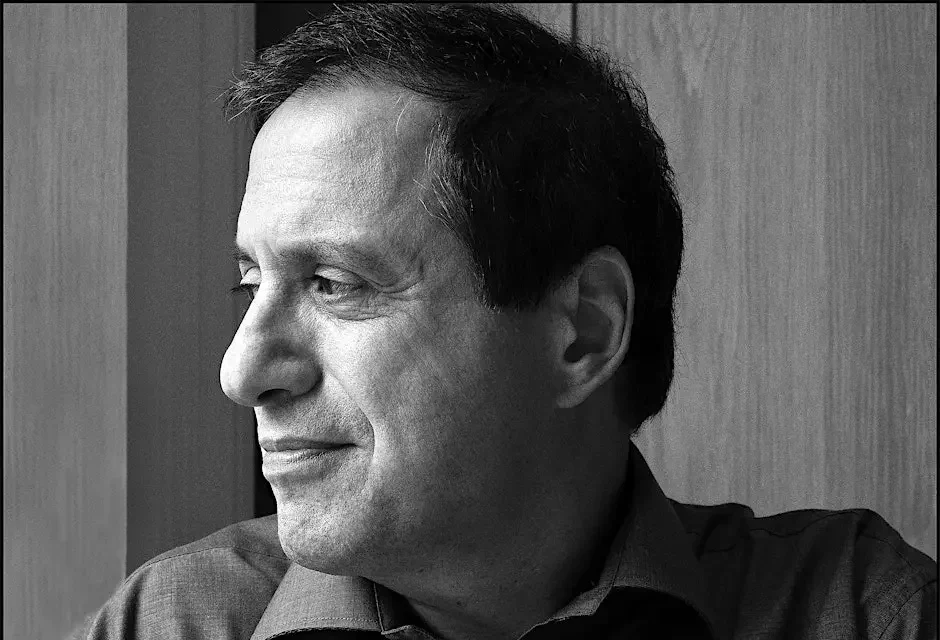

  • Armand d’Angour – Songmaking to Socrates: New Light on Ancient Classics

    Noel Salter Room New College, Holywell Street, Oxford, United Kingdom

    The Pharos Monday Lectures for Spring 2026

    Lecture 1: The Sound of Music in Ancient Greece

    Lecture 2: Archimedes’ Eureka

    Lecture 3. Catullus and his Lesbia

    Lecture 4. Aspasia, Teacher of Socrates

    It is sometimes thought that answers to big questions in classics are either known or beyond solution - questions such as what Greek music sounded like, or the true identity of Catullus’s Lesbia. In this series Prof Armand D'Angour will address four such questions and show that even today it’s possible to provide new and convincing answers to problems that many scholars had given up on.

    Armand d'Angour is Professor of Classics and a Fellow of Jesus College, Oxford. His work has ranged across wide areas of Greek culture, especially music and lyric poetry. His works include Socrates in Love (Bloomsbury 2019) and How to Innovate: An Ancient Guide to Creative Thinking (Princeton 2021).