• Jonathan Sumption & Catharine Titi – Pharos Conversations: The Elgin Marbles

    To Be Confirmed Oxford, United Kingdom

    In the first ever Pharos Conversation, a range of distinguished scholars, intellectuals, and commentators will debate the future of the Elgin Marbles.

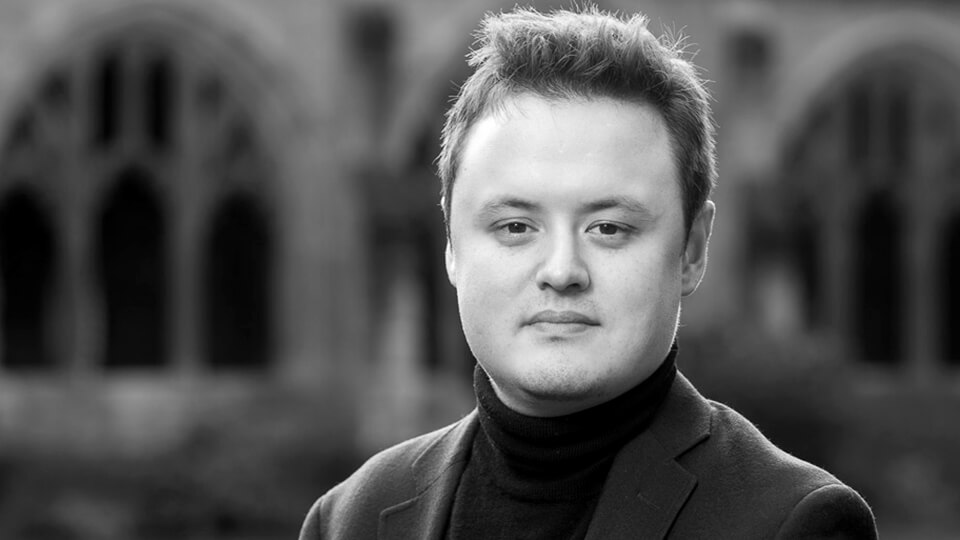
    Jonathan Sumption KC is a distinguished historian and one of Britain's leading jurists, serving on the UK Supreme Court (2012-2018) after a prodigious career as a barrister. He is also the author of a five volume history of the Hundred Years' War, and a prominent commentator on legal issues. His inaugural Pharos Lecture is available online at https://www.youtube.com/watch?v=LiM1EYlQgzg .

    Catharine Titi is a professor at the French National Centre for Scientific Research. Her specialisms include public international law, the settlement of international disputes, international investment law, international arbitration, and cultural heritage law. Her latest book is The Parthenon Marbles and International Law, which was published by Springer in 2023.

    Tiffany Jenkins is a British sociologist and writer, who currently serves as the culture editor for the journal Sociology Compass. She has written extensively on the controversies surrounding the Elgin Marbles and wider issues around the restitution of cultural heritage. Keeping Their Marbles: How the Treasures of the Past Ended Up in Museums – and Why they Should Stay There was published by Oxford University Press in 2016.

    Alexander Herman is the Director of the Institute of Art and Law. He has written, taught and presented on an array of topics in relation to art, law, and cultural property, often appearing in the national press and international journals. His most recent book is The Parthenon Marbles Dispute: Heritage, Law, Politics, published by Hart in 2023.

    Mario Trabucco della Torretta is a classical archaeoloist trained in Sicily and in Athens. His expertise covers classical Greek architecture and sculpture, Ancient Athens, and the Elgin Marbles. He is a prominent commentator and contributor to many journals, and tweets at @Marrio_Trabucco.

    Nigel Spivey is Fellow and Senior Lecturer in Classics at Emmanuel College, Cambridge, and a leading authority on Greco-Roman art - particularly of the Etruscans. He is the author many works, including Etruscan Art (1997), Enduring Creation: Art, Pain, and Fortitude (2001), and Greek Sculpture (2013).

    Free
  • Postponed Nicholas Rodger – Book Launch: A Naval History of Britain

    To Be Confirmed Oxford, United Kingdom

    The final instalment of N.A.M. Rodger’s definitive, authoritative trilogy on Britain’s naval history. At the end of the French and Napoleonic wars, British sea-power was at its apogee. But by 1840, as one contemporary commentator put it, the Admiralty was full of ‘intellects becalmed in the smoke of Trafalgar’. How the Royal Navy reformed and reinvigorated itself in the course of the nineteenth century is just one thread in this magnificent book, which refuses to accept standard assumptions and analyses. Rodger sets all this in the essential context of politics and geo-strategy. The character and importance of leading admirals – Beatty, Fisher, Cunningham – is assessed, together with the roles of other less famous but no less consequential figures. Based on a lifetime’s learning, it is the culmination of one of the most significant British historical works in recent decades.

    Naval specialists will find much that is new here, and will be invigorated by the originality of Rodger’s judgements; but everyone who is interested in the one of the central threads in British history will find it rewarding.

    Free
  • Elizabeth Roberts – Montenegro: Realm of the Black Mountain

    Old Dining Hall St Edmund Hall, Queen's Lane, Oxford, United Kingdom

    Montenegro was admitted to the UN as its 192nd member in June 2006, thus recovering the independence it had lost nearly ninety years earlier at the Versailles Peace Conference. Realm of the Black Mountain is the first full-length history of the country in English for a century, tracing the history of the tiny Balkan state from its earliest roots in the medieval empire of Zeta through its consistently ambiguous and frequently problematic relationship with its larger neighbour Serbia, the emergence of a priest/warrior ruler in the shape of the Vladika and its emergence from Ottoman suzerainty state at the Congress of Berlin. More recently, the book focuses on its troubled twentieth century history, its prominent role in the Balkan wars, its unique deletion from world maps as an independent state despite being on the winning side in the Great War, its ignominious role in the wars leading to the disintegration of Yugoslavia and its final reemergence as a member of the international community on the anniversary of the Battle of Kosovo in 2006.

    Lady Elizabeth Roberts is a Balkan scholar and former diplomat. She has taught Southeast European History at universities in the United States and Ireland. Roberts is also the co-author, with Kenneth Morrison, of The Sandžak: A History (2013)

    Free
  • Edward Howell – South Korean Politics

    To Be Confirmed Oxford, United Kingdom

    Join Dr. Edward Howell, Lecturer in Politics at the University of Oxford and a leading expert on Korean Peninsula affairs, for an insightful lecture on South Korea’s turbulent political landscape. In this talk, Dr. Howell delves into the dramatic events surrounding the impeachment of President Yoon Suk Yeol in December 2024, exploring the causes, consequences, and broader implications for South Korea’s democracy. From the short-lived martial law declaration to the nation’s polarised response, gain a deeper understanding of this historic crisis and its impact on East Asian geopolitics.

  • Andrew O’Shaughnessy – Thomas Jefferson’s Idea of a University

    Buchanan Room, Jesus College

    Thomas Jefferson was intimately involved in every aspect of the creation of the University of Virginia. It represented what he regarded as one of the three greatest achievements of his life to be listed on his tombstone. It revealed his talents as a lawyer who drafted the legislation for the assembly; as a surveyor who personally mapped the grounds; as a politician who masterminded the strategy to win approval in the assembly and to deflect intense opposition; as an architect who designed the layout, chose the building materials, and corresponded with the craftsman; and as an intellectual who developed an innovative curriculum, suggested the books for the library and the criteria for selecting the faculty. Jefferson was concerned with what remains a perennial issue which is the importance of education in the success of the republican democratic experiment. It was integral to his political philosophy in which he regarded public education as essential for the functioning of government by the people. He was part of what he regarded as the moral revolution that should accompany the political revolution of 1776. Although dismissed in higher education histories as a “finishing school for southern aristocrats” which trained many of the future leaders of the Confederacy, the lecture will argue that his vision of public education was as revolutionary as the other achievements on his tombstone and that it still has the potential to stimulate discussion about the role of universities. Furthermore, his vision of a university anticipated the idea of a modern university more than any other college in America.

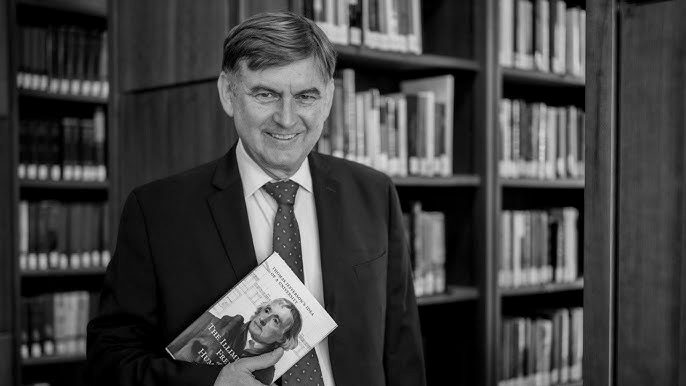
    Andrew O’Shaughnessy is Professor of History at the University of Virginia. Between 2003 and 2022, he served as Vice President of The Thomas Jefferson Foundation (Monticello), and the Saunders Director of the Robert H. Smith International Center for Jefferson Studies. His book The Men Who Lost America. British Leadership, the American Revolution and the Fate of the Empire (New Haven: Yale University Press, 2013) received eight national awards including the New York Historical Society American History Book Prize, the George Washington Book Prize, The National Society Daughters of the American Revolution Excellence in American History Book Award and The Society of Military History Book Prize. He is also the author of An Empire Divided: The American Revolution and the British Caribbean (Philadelphia: University of Pennsylvania Press, 2000). His most recent book books are The Illimitable Freedom of the Human Mind: Thomas Jefferson’s Idea of a University (Charlottesville: University of Virginia Press, 2021) and, co-authored with Trevor Burnard, Republic and Empire: Crisis, Revolution, and America’s Early Independence to be published by Yale University Press in September 2025. He is an editor of the Jeffersonian America series published by the University of Virginia Press. He coedited Old World, New World: America and Europe in the Age of Jefferson (Charlottesville: University of Virginia Press, 2010) and The Founding of Thomas Jefferson’s University of Virginia (Charlottesville: University of Virginia Press: 2019), and The European Friends of the American Revolution (Charlottesville: University of Virginia Press, 2023).